Hopefully your read about day 1 of the trip. If not, go back and check out part 1 of this segment here.
Before going to Accra, I had done my research. I’m the planner of my family. As such, if you know me, you know I read every article, had a list of things I wanted to do, found what bars I wanted to go to, identified new foods that seemed interesting, even went down so far as finding what drinks I wanted to try! In my research, I know that parts of Ghana experienced rolling blackouts. So when we woke up to no electricity, I knew that was the case. It was hot, but acceptable. I was getting the Accra Experience.
After Patrick woke up, I asked him to contact the Airbnb host. Turns out, while the power was out for us, it was not out for anyone else! Apparently, from what we were told, the electricity bill is paid in advance, not in arrears like in the US or in Bahrain. We had gone through all of the prepaid electricity in less than 12 hours. The host contacted the owner and the problem was solved (or so we thought).
We called to schedule a time for the driver to pick us up, and then we hopped in the shower and got dressed. I forgot to mention this in Part I, but the first thing that caused us to question if we could truly live in Africa (most parts at least) is the scare of yellow fever and malaria. Before coming we all had to get the yellow fever vaccine, which is a live vaccine. We got the shot a little over a week before heading to Ghana. I had been taking vitamins daily anyway, so it didn’t impact me; but a few days before leaving on our trip, Patrick came down with a cold. He took all kinds of medicine, vitamins, and probiotics; drank lots of water; and finally got better a day or so before we began travel. After speaking with someone from work, I was reminded that we had taken the vaccines and that was likely the cause. Now for malaria. There are three drugs used for malaria prevention that are known to be effective for Ghana. One of the three has been banned by the Department of Defense. Needless to say, we weren’t taking that one. The second (which would be preferred because it’s only one pill per week for1-2 weeks before, during, and 4 weeks after = 6-7 pills total), could not be found in Bahrain. That left Doxycycline. Doxycycline is to be taken once daily a few days before travel, during the trip, and 28 days after. It felt like I was back to taking birth control! 37 pills all together for each of us, smh. Enough said about the diseases we could encounter, back to our trip.
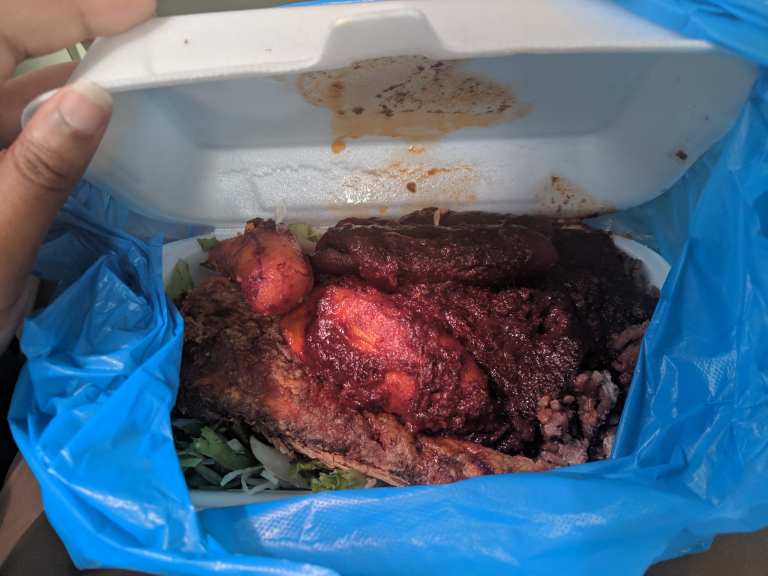
So we started each day by getting dressed, and spraying insect repellent all over ourselves. That day, which was beautiful by the way, we were picked up and taken to a roadside restaurant for food on the go. Again, no good picture, but I did get one of the plate. I didn’t want to seem rude taking pictures of people as if they were an exhibit. We had waakye, which was beans and rice; however the beans were slightly mashed. That was in the bottom of the container with salad on the other side on the bottom. Included on top was a piece of fish, plantains, ‘meat’, gravy from the meat and black pepper sauce on top of that. The meat was the consistency of pig tails from collard greens, but it was either beef or goat. It was decent, but not my favorite. The fish was also okay, but a little dry. However, the sauce was the star of the show. The plantains were great, but with the sauce combo they transformed into this exquisite dish both sweet and spicy. The waakye was also so delicious and familiar.
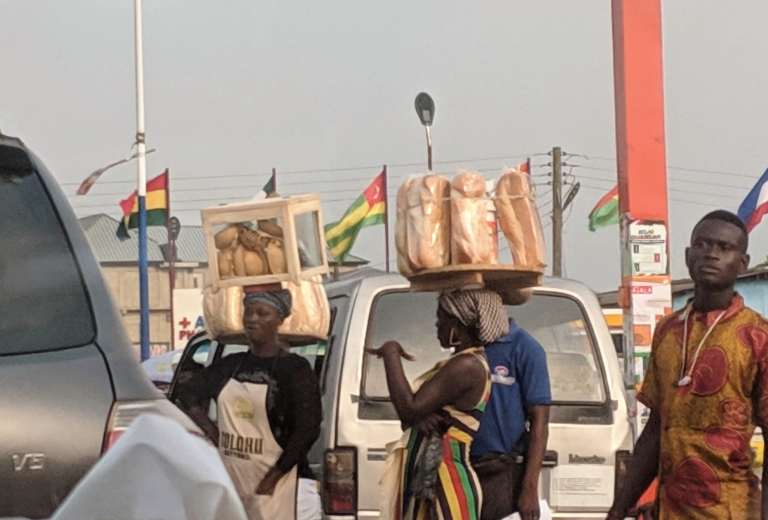
The ride up the Cape Coast was interesting to say the least. As we drove out of the city, we saw pride, hustle, and poverty, all rolled into one. On the populated busy streets, men, women, and children sold everything from food, clothes, shoes, q-tips, tablecloths, Tupperware, and more. Some did this with babies tied to their backs, balancing their wares on their heads. There were construction projects that had started but were in a hiatus, houses with thatch roofing, and many that appeared to have no electricity. But the faces we saw wore no signs of despair, anger, or hatred. The experience humbled me, made me grateful for all that I have, and made me vow to complain less.
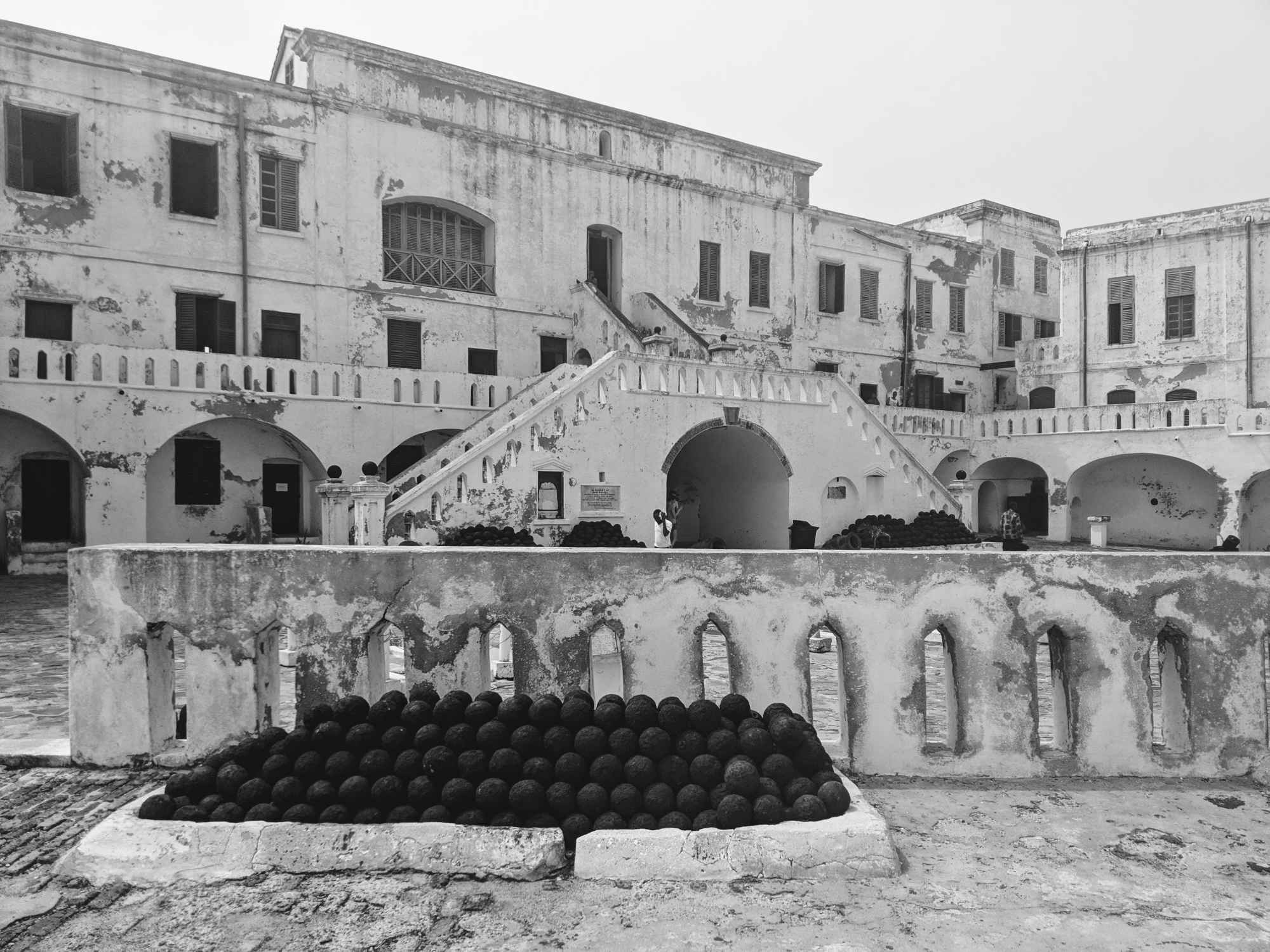
On the way up, we passed a smaller slave fort, Fort Amsterdam. Upon arrival at the Cape Coast Castle (I wanted to go to Elmina Castle, but the driver got lost on the way and again, I had just promised not to complain), the mood changed just a bit. I knew what I was going to see, but had no way of knowing what I was going to see. We went in and hung around for a while before we joined a group for a tour of the facility. So many mixed emotions came from this part of the trip alone. We were happy to be there, we wanted to see where our ancestors (whether or not we have Ghanaian roots) were taken and stripped of so much, but it was also a harrowing experience.
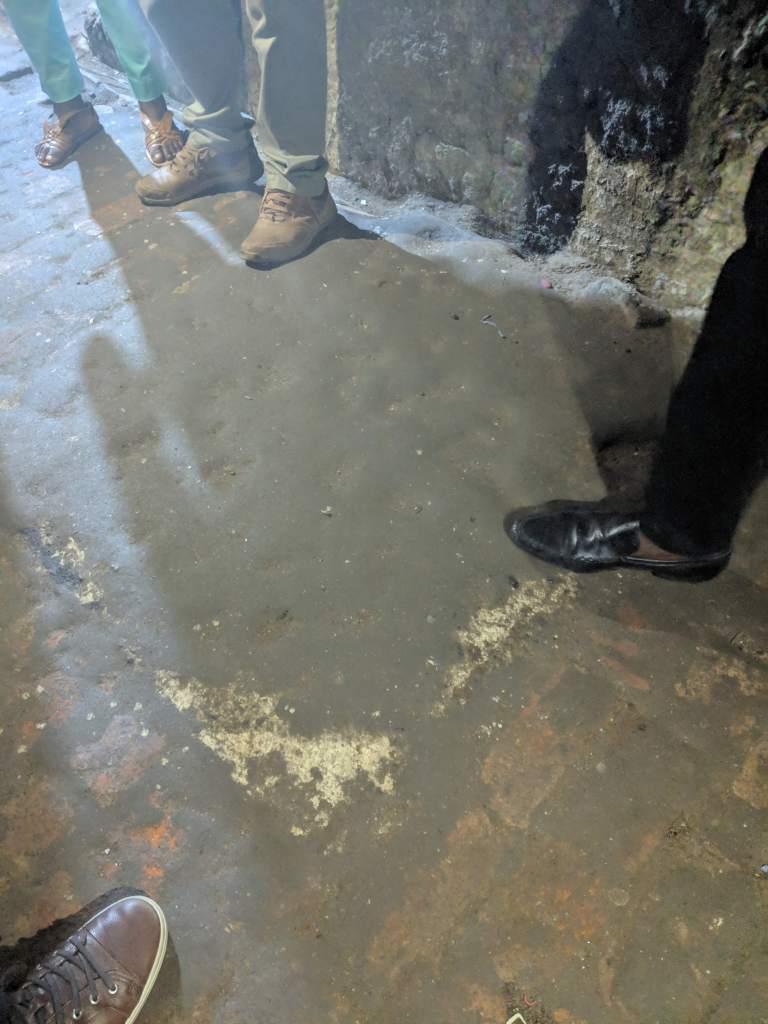
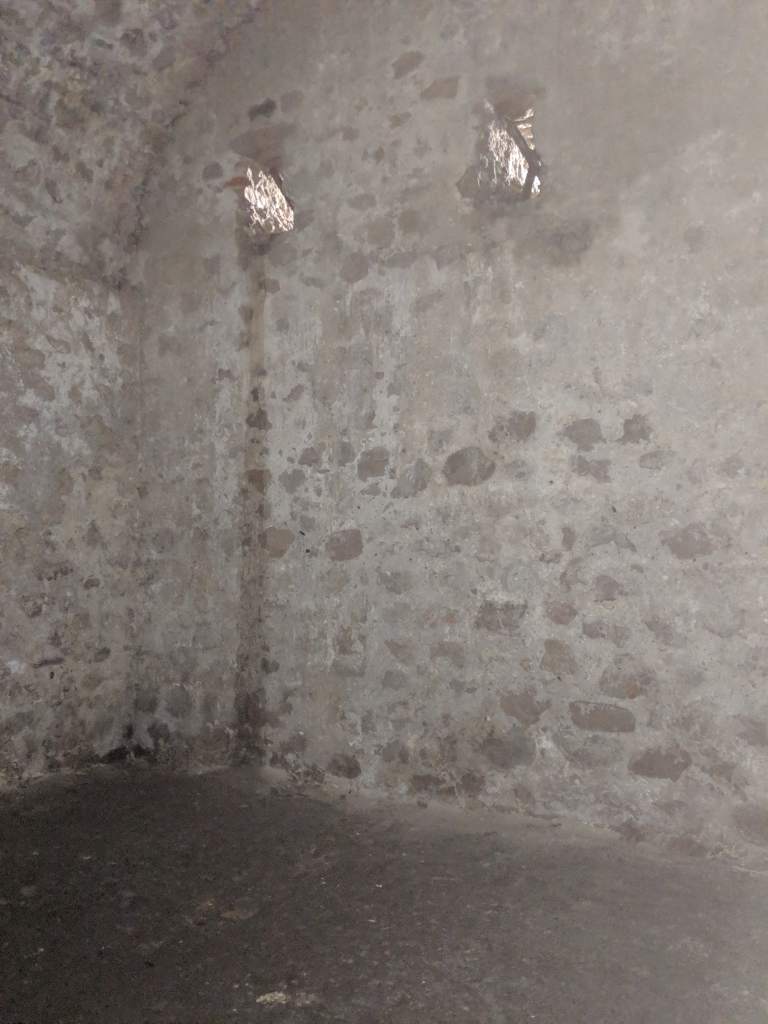
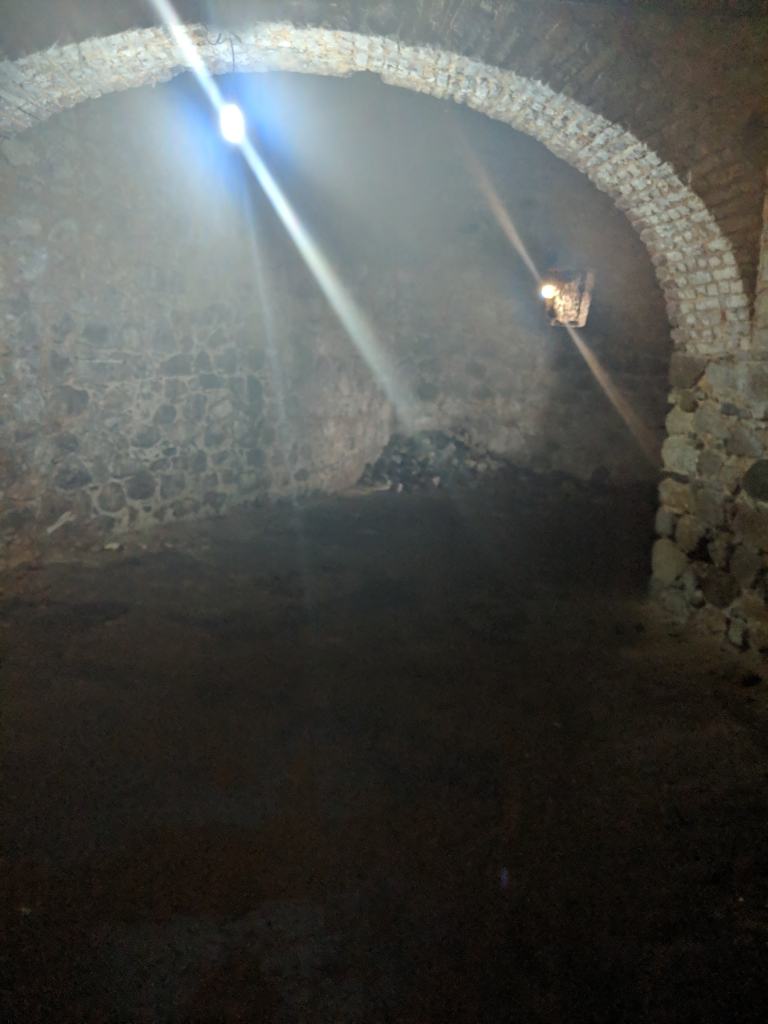
The first portion of the tour included a walk through the male dungeon. The facility consisted of three chambers, each small damp room having only walls and a few window holes for light and ventilation. These weren’t low enough to see out of and get a glimpse of the world (or add any humanity), but were high enough simply to keep you alive in anguish. As told, each chamber would traditionally have 2 buckets for waste. As people were chained, and guards could care less, the buckets often overflowed and many couldn’t get to them even if they had wanted to., as the entire chain of men would have to travel to the bucket in order for it to be utilized. Because of this, small shallow channels ran along the center of the floor so that waste could travel through the people (on the people) and eventually drain. When looking at the floor, it was also pointed out to us that after testing, it was discovered that the very same flow we were standing on consisted of compacted human remains.
Let that sink in. We were standing on the remains of people who had been taken from their homes, captured, tortured, stripped of all they had, and either enslaved or killed… or both.
I’ll stop here so that can resonate. More to follow…
 Bentleys in Bahrain
Thank you for sharing. This is a very interesting read. Doxycycline is a common antibiotic used here in the states but I don’t think I would want to take it that long either. Standing on human remains! Wow. What was that on the woman’s head? Bread?
LikeLike
Yeah, I’ve had doxy before, but never for that long. We still have 2 weeks left! And yes, that was bread, but some walked with plantains, others carrying bottled water, and still more carrying whatever else they could sell. The next part of the story should be posted by Wednesday.
LikeLike